

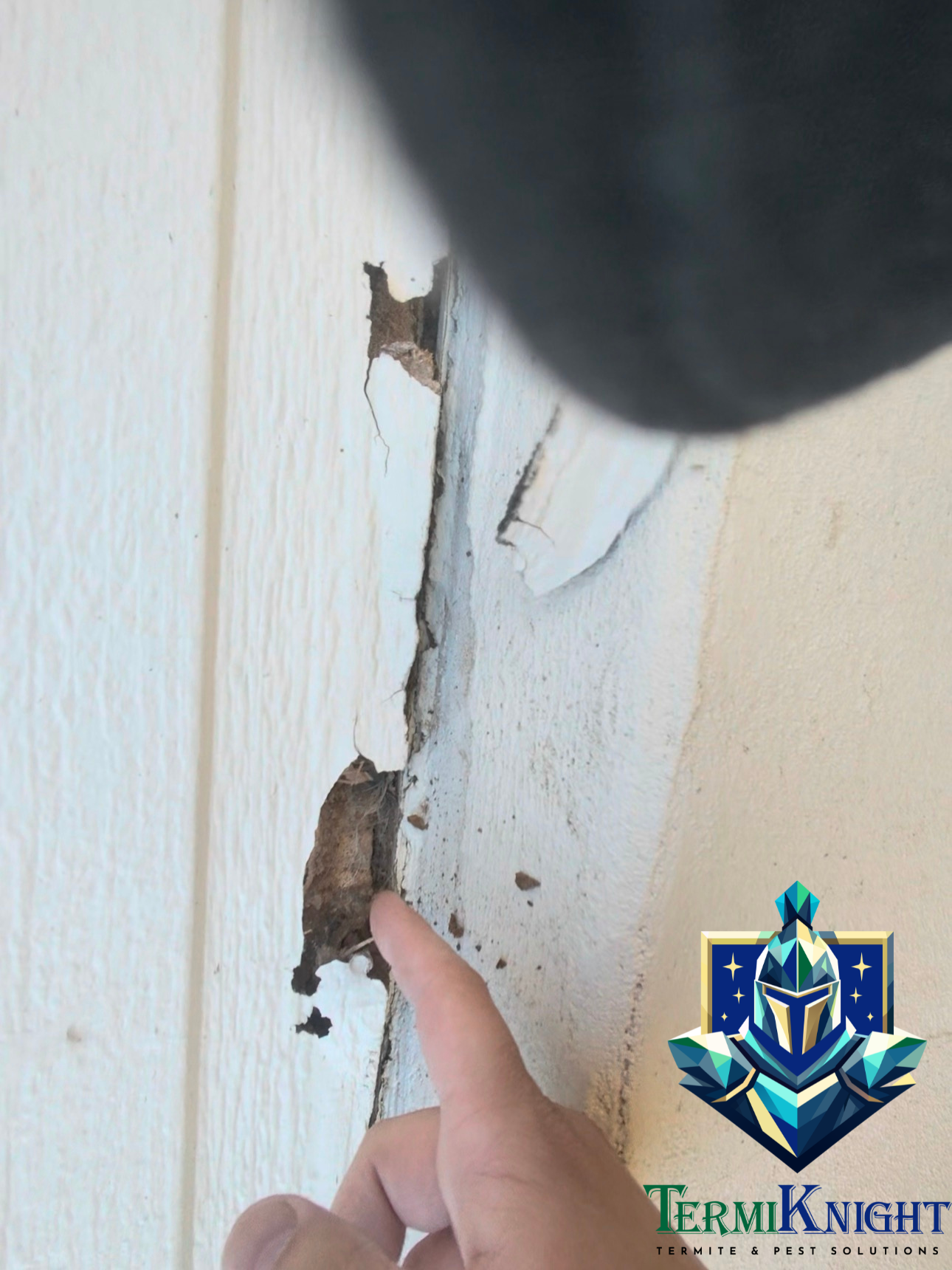
If you are searching for termite control in Surprise AZ, there is a good chance you have already found something around your home that does not look right.
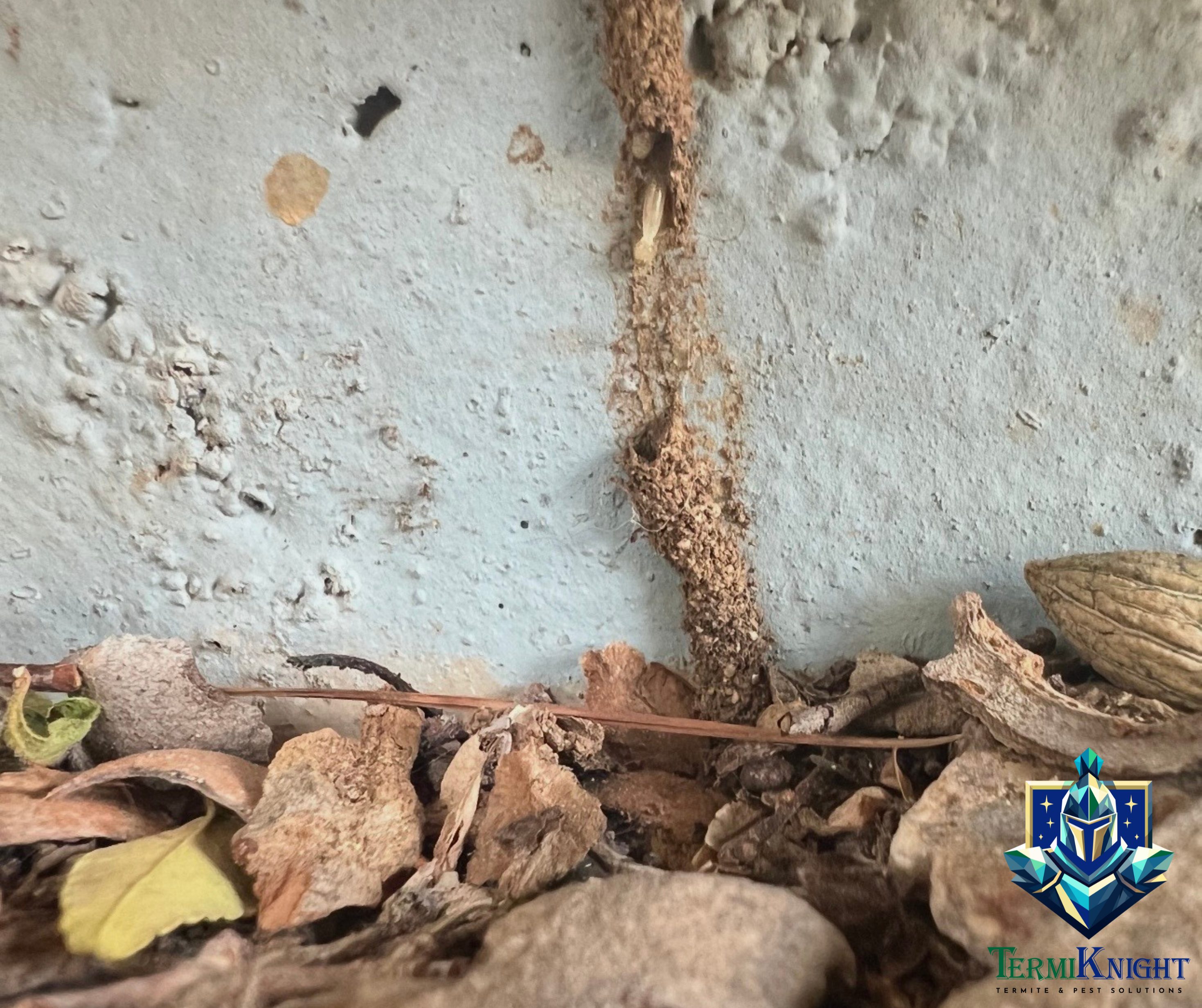
Maybe it is a mud tube in the garage.
Maybe dirt suddenly appeared around a plumbing penetration.
Maybe you found discarded wings near a window.
Or maybe you bought the home recently and simply have no idea when it was last treated.
That is where a termite inspection should come in.
A professional termite inspection should not begin with the assumption that you need a treatment.
It should answer a much simpler question:
What is actually happening at this property?
At TermiKnight, my standard termite inspections are free. I personally inspect the property, look for current and previous termite evidence, evaluate likely entry points, consider how the home was built, and review previous treatment information when it is available.
Sometimes I find active termites and recommend treatment.
Sometimes I find evidence from an old infestation that appears to have already been treated.
Sometimes the homeowner still has an active warranty with another termite company and I tell them to call that company first.
And sometimes what looked suspicious turns out not to be termites at all.
That is how an inspection should work.
Arizona has substantial subterranean termite pressure. Some areas may have up to 20 subterranean termite colonies per acre, so homeowners should take termite evidence seriously.
But taking it seriously does not mean automatically assuming the worst.
Here are 12 things I look at when inspecting an Arizona home for subterranean termites.
1. I Start With What the Homeowner Found
Before walking around the entire property, I want to know what caused the homeowner to call me.
Usually there is a reason.
Common examples include:
- A mud tube
- Flying termites
- Discarded wings
- Damaged wood
- Dirt appearing around plumbing
- Activity in the garage
- An old termite treatment
- A home sale
- A previous inspection
- A neighbor recently finding termites
If the homeowner has a picture, even better.
Sometimes termite evidence gets knocked down, cleaned up, painted over, or damaged before I arrive.
A photograph showing what it looked like originally can be extremely useful.
I also ask when the evidence first appeared.
Something that showed up yesterday is different from a mud tube that has been sitting behind a garage cabinet for ten years.
That initial conversation helps determine where I should pay extra attention during the inspection.
2. I Determine Whether the Evidence Looks Active or Old
One of the biggest mistakes homeowners make is assuming every mud tube means they currently have an active infestation.
Old termite evidence can remain on a home long after the termites are gone.
At the same time, homeowners sometimes make the opposite mistake and assume a tube is old because it looks dry.
I look at the condition of the evidence.
Things that may suggest more recent activity can include:
- Live termites
- Fresh mud
- Moist material inside a tube
- Newly constructed sections
- Evidence that has been rebuilt
- Fresh wood damage
- Recently discarded wings
The evidence has to be considered together with the treatment history and the rest of the property.
If you find a suspicious mud tube, I generally recommend leaving it intact until it can be inspected.
Do not immediately spray it with household bug killer or scrape everything away.
You are not going to eliminate an underground termite colony by killing a handful of workers in a visible tube.
You may simply destroy useful evidence.

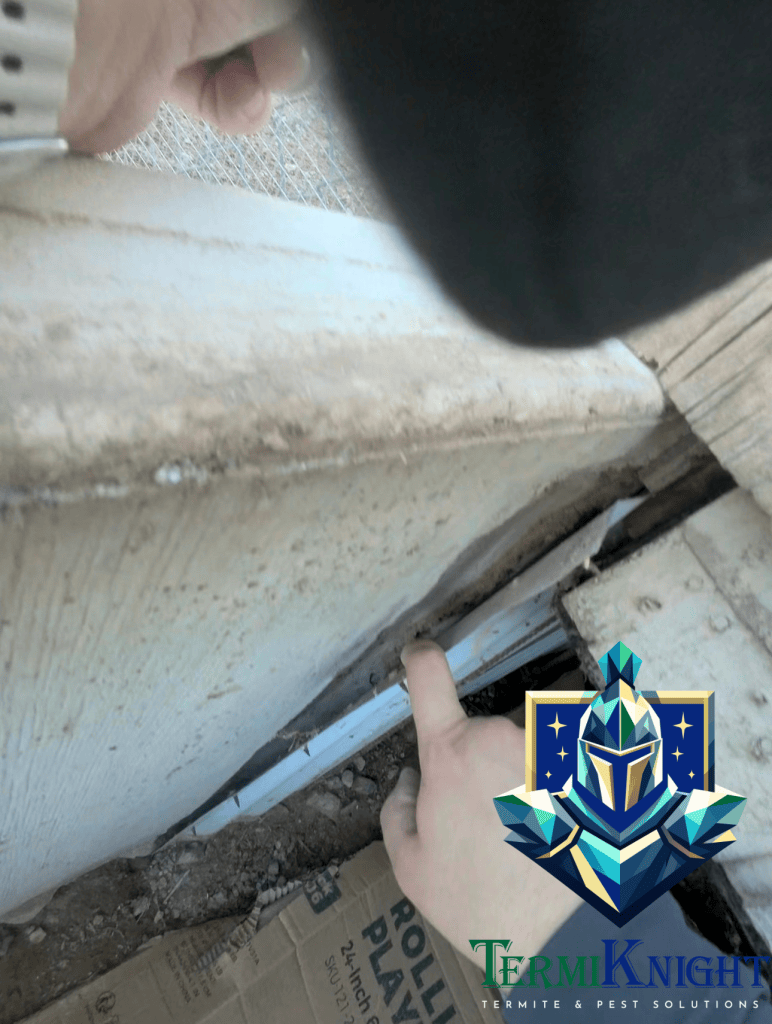
3. I Inspect the Exterior Foundation
After looking at the original area of concern, I inspect the accessible exterior of the home.
I am looking for more than obvious termite tubes.
The goal is to understand how termites could move from the surrounding soil into the structure.
I pay attention to:
- Foundation edges
- Stucco
- Plumbing penetrations
- Construction joints
- Cracks
- Attached concrete
- Soil levels
- Decorative rock
- Landscaping
- Irrigation
- Moisture
- Previous treatment evidence
Subterranean termites spend most of their lives underground.
The mud tube you see above ground is simply a protected pathway between the soil and the structure.
That means the soil-to-structure connection matters.
One small tube on an exterior wall may be straightforward.
A tube disappearing behind stucco or entering at an attached patio can require more investigation.
Professional termite control in Surprise AZ should be based on how the house is actually built, not simply where the first mud tube happened to appear.
4. I Check Whether Landscaping Is Hiding the Foundation
This is extremely common in Arizona.
Decorative rock gets added.
Plants grow.
Soil gets moved.
Artificial turf gets installed.
Eventually, portions of the foundation may become difficult or impossible to inspect visually.
One condition I watch for is soil or decorative rock sitting too high against the stucco.
That can conceal termite activity.
Instead of building an exposed mud tube that a homeowner can easily see, termites may be able to travel into a hidden area.
I also look for:
- Raised planters against the house
- Heavy vegetation
- Wood touching soil
- Landscaping material piled against the structure
- Irrigation directly beside the foundation
None of these conditions automatically means termites are present.
They simply affect how easy it is to inspect the structure and how favorable the surrounding conditions may be.
Visibility is valuable.
If termites begin building a tube, I would rather have that tube exposed where the homeowner can see it.
5. I Look for Moisture and Drainage Problems
Moisture does not magically create termites.
The colonies already exist throughout Arizona.
But subterranean termites require moisture, and consistently wet areas around the structure deserve attention.
I look for:
- Irrigation leaks
- Broken drip emitters
- Standing water
- Poor grading
- Roof runoff
- Pool equipment leaks
- Plumbing leaks
- AC condensate
- Overwatered landscaping
- Wet soil beneath decorative rock
The rain we had recently is actually a perfect example of why drainage matters.
After rain, you can often see exactly which parts of the property hold water and which areas drain properly.
If one corner of the house stays saturated while everything else dries, I want to know why.
Again, moisture alone does not mean I am going to recommend a termite treatment.
Sometimes my recommendation is simply to fix a leaking irrigation line.
The point of an inspection is to identify the condition, not turn every problem into a termite sale.
6. I Inspect the Garage Carefully
Garages deserve special attention during Arizona termite inspections.
A lot of homeowners first discover termite activity there.
Garages may contain:
- Slab transitions
- Expansion joints
- Wall joints
- Plumbing
- Exterior foundation exposure
- Attached concrete
- Areas hidden by storage
And garages tend to collect things.
Boxes.
Shelving.
Tools.
Cabinets.
Holiday decorations.
Storage bins.
All of that can hide a mud tube.
I inspect accessible wall edges and slab transitions, especially around areas where the garage connects to the rest of the structure.
If possible, homeowners can help by making sure the area where they saw activity is accessible before I arrive.
You do not need to empty the entire garage.
I just need to be able to see the relevant areas.
7. I Look Closely at Plumbing Penetrations
Plumbing penetrations are important because they can create pathways through the slab.
Subterranean termites do not need to enter through an exposed exterior wall.
They can travel beneath the structure and appear around plumbing.
That is why homeowners sometimes find termite evidence in:
- Bathrooms
- Kitchens
- Laundry rooms
- Utility areas
- Garages
with no obvious exterior tube nearby.
One thing homeowners occasionally notice is unexplained dirt appearing around plumbing.
They clean it away.
It comes back.
That deserves attention.
The worker termites you see are only part of the colony.
The queen remains underground, potentially many feet below the surface, where she may produce approximately 300 to 500 eggs per day.
That is why spraying one plumbing area is not necessarily the same as addressing the underlying termite problem.
8. I Look at Patios, Walkways, and Attached Concrete
Concrete does not automatically stop subterranean termites.
Termites generally do not need to chew through solid concrete.
They can travel underneath it.
Then they look for openings such as:
- Expansion joints
- Construction joints
- Foundation cracks
- Plumbing penetrations
- Slab transitions
Attached patios are particularly important because they can cover soil directly beside the original foundation.
The same applies to:
- Sidewalks
- Concrete extensions
- Garage slabs
- Pool decking
- Hot tub pads
When I inspect a home, I want to understand how those areas connect to the structure.
If treatment becomes necessary, some attached concrete may need to be treated differently than exposed soil.
That is why a termite inspection is also partly a construction inspection.
I am not only asking:
Where are the termites?
I am asking:
How can termites reach this house?
9. I Determine What Type of Foundation I Am Working With
Foundation type matters.
Many newer Arizona homes are built using post-tension slabs.
Other homes may have:
- Floating slabs
- Stem walls
- Separate garage slabs
- Crawlspaces
- Different slab additions
This affects how a termite treatment should be designed.
Post-tension slabs contain tensioned cables inside the concrete.
Because of those cables, interior drilling is generally avoided.
A floating slab may require a different treatment strategy.
A crawlspace creates its own set of access and moisture considerations.
I want to understand these things before recommending treatment.
Professional termite treatment in Surprise AZ should fit the construction of the home.
The home should not be forced into one generic treatment pattern.
10. I Look for Previous Termite Treatment
Previous treatment history can completely change my recommendation.
If I find termite evidence, I want to know whether the home has already been treated.
If it has, I look for information such as:
- Treatment date
- Company
- Product used
- Areas treated
- Warranty
- Previous retreatments
- Treatment records
This is important because a homeowner may still be covered.
If another company treated the home and the warranty is still active, I am not going to pretend the homeowner needs to pay me for another whole-house treatment.
I will tell them to contact the original company.
That warranty is one of the things they paid for.
Treatment history also helps distinguish an old infestation from a new one.
For example, if a bathroom was treated three years ago and an old mud tube remains in that exact area, that information matters.
If there is fresh activity on the opposite side of the home, that may tell us something different.
Keep your termite paperwork.
It can save a lot of confusion later.
11. I Look at Whether a Spot Treatment or Complete Treatment Makes Sense
Finding termites does not automatically mean every homeowner needs the same treatment.
There are situations where a localized treatment may make sense.
At TermiKnight, I offer spot treatments when appropriate.
But I am very clear about what that means.
A spot treatment addresses a specific area.
It does not provide a whole-house termite warranty.
I cannot reasonably guarantee portions of a structure that were never treated.
A complete treatment is different.
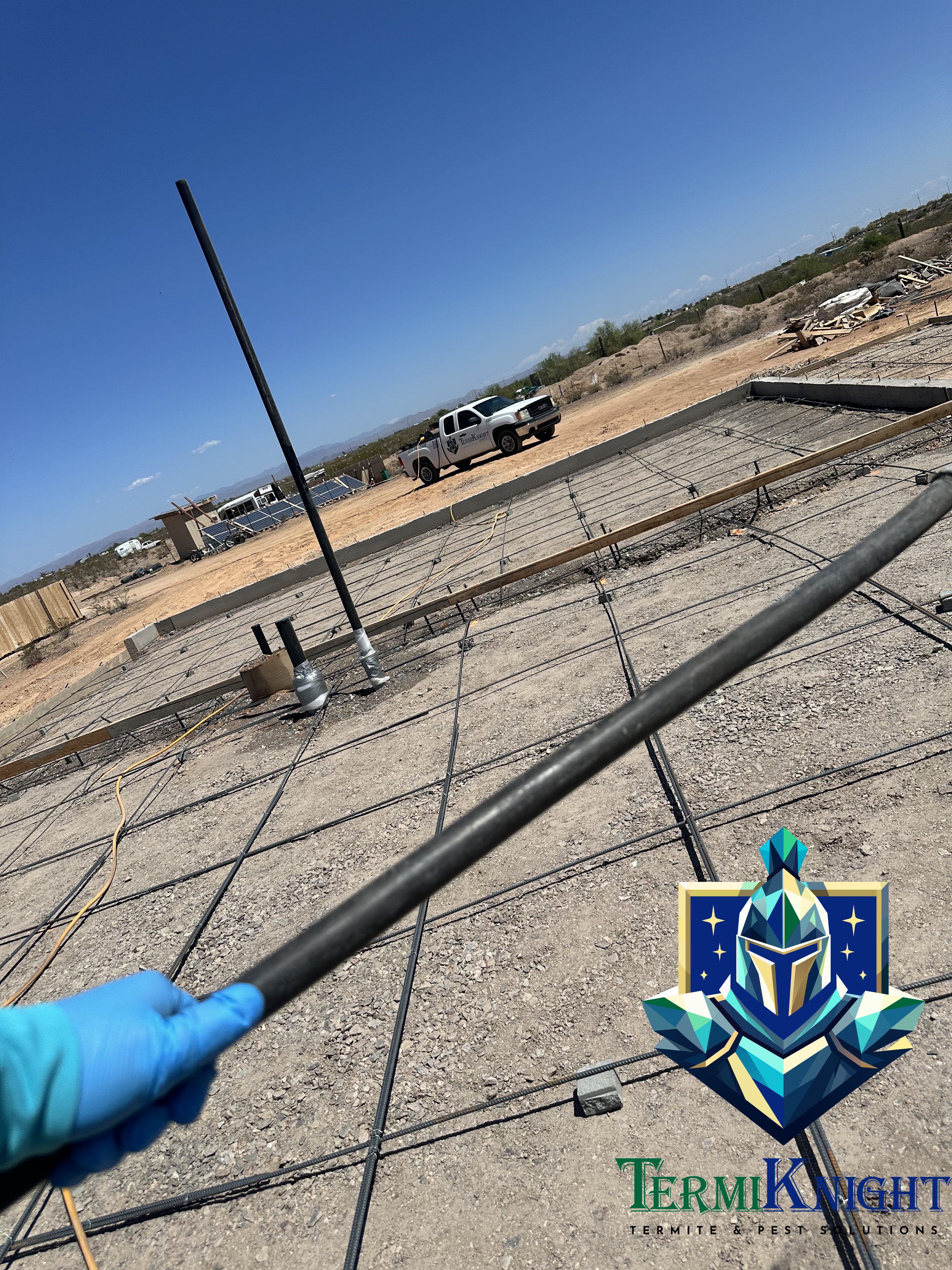
With a complete Termidor HE treatment, my goal is to establish a continuous treated zone around the structure wherever construction allows.
That may involve:
- Trenching
- Rodding
- Treating expansion joints
- Treating plumbing penetrations
- Treating garage areas
- Drilling attached concrete where appropriate
- Treating accessible wall voids when necessary
The recommendation depends on what I find during the inspection and what level of protection the homeowner wants.
Some homeowners only want the immediate problem addressed.
Others want long-term protection for the entire structure.
My job is to explain the difference.
12. I Explain What I Found Before Talking About Price
This may sound obvious, but I think it matters.
Before I tell someone what a termite treatment will cost, I want them to understand why I am recommending it.
I explain:
- Where I found activity
- Whether the evidence appears active or old
- Likely termite entry points
- Foundation type
- Areas that may need treatment
- Whether previous treatment matters
- Whether a spot treatment is an option
- What a complete treatment would include
Then we can talk about price.
A termite proposal should make sense to the homeowner.
You should not receive a number with no explanation of how the company arrived at the treatment plan.
If I am proposing a complete Termidor HE treatment, I will explain what I intend to treat and why.
What Does a Free Termite Inspection Include?
At TermiKnight, my standard termite inspection is designed to determine whether there is termite evidence and whether treatment appears necessary.
I inspect accessible areas of the property and evaluate the conditions relevant to subterranean termite activity.
That may include:
- Exterior foundation
- Garage
- Visible interior evidence
- Plumbing areas
- Attached patios
- Slab transitions
- Landscaping
- Moisture conditions
- Previous treatment evidence
The inspection is visual and non-destructive.
I am not opening walls or tearing apart the home during a normal termite inspection.
Termites are often hidden, which means no visual inspection can see every inch inside a structure.
But visible evidence, construction details, treatment history, and experience can tell us a lot.
Is a Free Termite Inspection the Same as a WDIIR?
No.
This is an important distinction.
My standard termite inspection is free when you are trying to determine whether your home has a termite problem or needs treatment.
A WDIIR, or Wood-Destroying Insect Inspection Report, is a formal report often used for real estate transactions.
TermiKnight currently charges $97 for a WDIIR.
A WDIIR documents visible evidence and applicable conditions involving wood-destroying insects in accessible areas of the property.
It is a different service from calling me because you found a mud tube and want to know whether it is active.
So if you are simply a homeowner who found something suspicious, you do not need to pay for a WDIIR just to have me inspect it.
If you are buying, selling, refinancing, or have been specifically asked for a formal wood-destroying insect report, that is when the WDIIR becomes relevant.
Arizona treats the WDIIR as its official wood-destroying insect inspection report, and WDIIRs are among the termite-related actions reported through the state’s eTARF system.
Should I Clean Up the Termite Evidence Before the Inspection?
Preferably not.
If you find:
- A mud tube
- Discarded wings
- Damaged wood
- Dirt around plumbing
- Live termites
leave the evidence intact when possible.
Take pictures.
If the evidence is somewhere that needs to be cleaned for safety or normal household use, pictures can still help.
One thing I recommend doing after a termite treatment is completed and activity has been resolved is cleaning up old evidence.
Old mud tubes can remain visible for years.
If nobody removes or marks them, a future homeowner, inspector, or buyer may discover the same old evidence and have no idea whether it is new or twenty years old.
Once the treatment is complete and the appropriate documentation has been provided, cleaning and painting over old evidence creates a clean baseline.
Then if a new tube appears later, it is much easier to identify.
Do I Need to Move Everything Before a Termite Inspection?
Usually, no.
You do not need to empty your house or completely clear the garage before I arrive.
If you already know where the suspicious activity is located, make that specific area accessible if possible.
For example, if a mud tube is behind a stack of boxes, move the boxes enough that I can inspect the wall.
If the concern is beneath a bathroom sink, make sure I can see the plumbing area.
The easier it is to see the relevant areas, the better the inspection.
You do not need to turn the appointment into moving day.
How Long Can Termites Stay Hidden?
Potentially a long time.
Subterranean termites spend most of their lives in places homeowners cannot see.
Workers may travel:
- Underground
- Beneath slabs
- Inside mud tubes
- Behind drywall
- Around plumbing penetrations
- Inside wood
This is why waiting for major visible damage is not a good termite strategy.
A tiny mud tube can be useful early evidence.
Do not ignore it simply because there is no obvious wood damage.
On the other hand, do not assume one tiny tube means the house is falling apart.
Have it inspected.
Can I Tell Whether Termites Are Active Myself?
Sometimes.
If you open a tube and see live termites, that is pretty convincing evidence.
Freshly rebuilt mud can also indicate activity.
But many situations are less obvious.
A tube may appear dry while activity exists elsewhere.
Old damage can look alarming even though the infestation was treated years ago.
Termite evidence needs context.
That is one reason previous treatment records are so useful.
Why Do I Check the Entire Home if Termites Were Found in One Room?
Because termites do not live in that room.
They live underground.
The room is simply where workers reached the structure.
If I only look at the exact location the homeowner points to, I may miss important conditions elsewhere.
I want to know whether there are:
- Additional tubes
- Previous treatment areas
- Moisture problems
- Other entry points
- Landscaping issues
- Attached concrete
- Different foundation conditions
Finding activity in one bathroom does not automatically mean termites are everywhere.
But it does justify looking at the rest of the accessible structure before making a recommendation.
Why I Use Termidor HE When Treatment Is Needed
When a complete post-construction termite treatment is necessary, I use Termidor HE.
Termidor HE is a non-repellent liquid termiticide.
Instead of simply creating an area termites immediately detect and avoid, workers can travel through properly treated soil and become exposed.
Because termites are social insects, exposed workers can interact with other termites through normal contact and grooming.
For me, that fits the biology of subterranean termites better than simply trying to kill the handful of workers visible inside the house.
The colony is underground.
The treatment needs to address how workers travel between that colony and the structure.
Why I Prefer Termidor HE Over Relying Entirely on Bait Stations
Bait systems use individual stations placed around the property.
Termites need to encounter those stations and feed on the bait.
There are spaces between the stations.
I prefer directly protecting the structure.
With a liquid Termidor HE treatment, I can create a continuous treated zone around the home wherever the construction allows.
I have personally inspected properties where bait stations were installed and termites still reached the structure.
That does not mean bait stations cannot work.
They can.
I simply prefer a treatment strategy centered directly around the home.
Moisture can also create issues around bait stations.
Poor drainage, excessive irrigation, and wet conditions can contribute to mold, and heavily moldy bait material may become less attractive to termites.
Bait programs also generally rely on recurring monitoring.
For my post-construction termite customers, I prefer a complete Termidor HE treatment backed by a clear warranty.
What Happens If I Already Have a Termite Warranty?
Tell me.
Better yet, find the paperwork before the inspection if you can.
If another company has an active warranty on the property, that may be your best first option.
You already paid for the coverage.
A reputable termite professional should not try to sell you an unnecessary second treatment simply because you forgot about the original warranty.
If the warranty has expired, then we can evaluate what protection remains and whether a new treatment makes sense.
What Happens If No Termites Are Found?
Then I tell you I did not find termites.
A free termite inspection is not supposed to guarantee a sale for me.
There are plenty of things around Arizona homes that homeowners mistake for termite evidence.
There are also old tubes and old damage left from infestations that were treated years ago.
If I do not believe the property needs another termite treatment, I am not going to recommend one simply because I drove out there.
Sometimes reassurance is the result of the inspection.
That is perfectly fine.
What If Termites Are Found?
Then we talk about the next step.
Depending on the situation, that may be:
- Using an existing warranty
- A localized spot treatment
- A complete structural treatment
- Addressing a moisture or landscaping problem
- Additional evaluation of a specific area
If a complete treatment is appropriate, I will explain how the home would be treated and provide a proposal.
At TermiKnight, complete post-construction treatments use Termidor HE and include:
✔️ 5-year initial warranty
✔️ No annual renewal fee during the first 5 years
✔️ One annual inspection available upon request
✔️ Retreatment when necessary under the warranty
✔️ Transferable coverage
✔️ Annual renewal options up to 10 years total
That gives the homeowner a long-term plan if termite activity ever returns.
Why Treatment Records Matter
If treatment is performed, keep the paperwork.
Termite records can become valuable years later when:
- Selling the home
- Buying another home
- Transferring a warranty
- Investigating new activity
- Comparing old evidence
- Reviewing previous treatment
At TermiKnight, qualifying termite treatments are documented through the appropriate Arizona termite reporting process.
Arizona homeowners can also use the state’s termite records system to research certain past termite treatments and inspection reports associated with a property.
This is useful because homeowners should not have to rely solely on memory when trying to determine what happened to a property years earlier.
A Good Termite Inspection Should Leave You With Answers
You should understand more about your home after a termite inspection than you did before it.
You should know:
What evidence was found.
Whether it appears active or old.
Where termites may be entering.
Whether previous treatment matters.
What type of treatment is appropriate.
Whether your existing warranty may apply.
What the next step should be.
That is ultimately what a professional inspection is for.
Not to scare you.
Not to automatically sell you the biggest treatment possible.
To determine what is happening and give you enough information to make a decision.
Schedule a Free Termite Inspection in Surprise AZ
If you have found a mud tube, discarded wings, damaged wood, dirt around plumbing, or anything else that looks suspicious, TermiKnight offers free termite inspections throughout Surprise and the West Valley.
I personally perform the inspection and explain what I find.
If the evidence appears old, I will tell you.
If your current termite warranty may cover the activity, I will tell you to use it.
If the property does not appear to need another termite treatment, I will tell you that too.
And if treatment is necessary, I will explain exactly what I recommend and why.
That is how professional termite control in Surprise AZ should work.
✔️ Free termite inspections
✔️ $400 OFF complete termite treatment
✔️ Termidor HE post-construction treatments
✔️ 5-year initial warranty, renewable up to 10 years
✔️ No annual renewal fee during the first 5 years
✔️ One annual inspection available upon request
✔️ Retreatment included when necessary under the warranty
✔️ Transferable warranty
✔️ WDIIR reports available for $97
✔️ TARF recorded with the Arizona Department of Agriculture when required
📞 Call or text: (623) 241-2598
🏰🛡️ Protect your Castle with TermiKnight!


Leave a Reply