

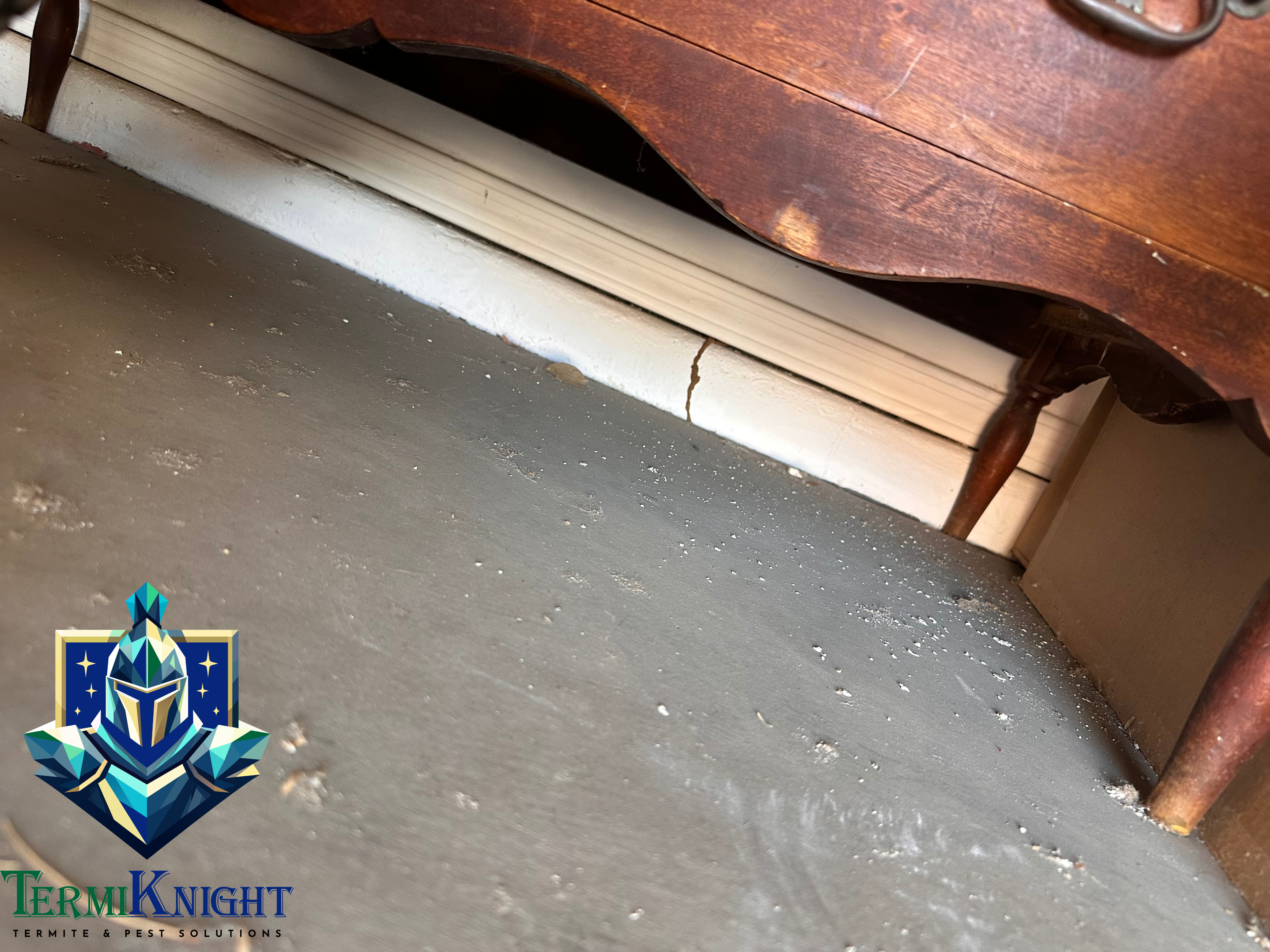
If you are searching for termite control in Surprise AZ, one of the most important things to understand is that subterranean termites rarely attack a home in an obvious location.
Most homeowners expect to find termites crawling across a wall or eating exposed wood. In reality, Arizona subterranean termites usually remain hidden underground, behind drywall, beneath flooring, inside wall voids, or within protected mud tubes.
That is what makes them so difficult to detect.
A home can appear perfectly normal while termites quietly travel between an underground colony and the wooden structure above.
Professional termite control in Surprise AZ is not simply about treating the first mud tube you find. A thorough termite inspection looks for the hidden areas termites are most likely to use and determines how they may be entering the structure.
Arizona homeowners face significant termite pressure throughout the year. Some areas may contain up to 20 subterranean termite colonies per acre, and Arizona experiences two major termite swarming seasons:
- March through May
- July through September
August falls directly within that second swarming season.
If you know where termites are most likely to hide, you have a much better chance of discovering activity before serious damage develops.
Here are 12 hidden termite hotspots every Arizona homeowner should know about.
1. Behind Bathroom Walls
Bathrooms are one of the most common places I find hidden termite activity.
Why?
Plumbing penetrations.
Water and drain lines pass through the concrete slab and create small openings around the pipes. Subterranean termites need very little space to gain access to a structure.
Once they reach a plumbing penetration, they can travel upward inside the wall where homeowners cannot see them.
Bathrooms also naturally contain moisture, which can make these areas even more favorable.
Possible warning signs include:
- Bubbling paint
- Soft baseboards
- Loose trim
- Unexplained wall damage
- Mud appearing near plumbing openings
- Damage around shower walls
One of the biggest mistakes homeowners make is assuming the problem is simply water damage.
Moisture and termite damage can sometimes look surprisingly similar.
If an area around a bathroom wall looks suspicious, it is worth having it inspected before tearing everything apart.
2. Plumbing Penetrations Under Kitchen Cabinets
Kitchens contain many of the same termite entry opportunities as bathrooms.
Supply lines, drains, dishwasher connections, and other plumbing may pass through or near the slab.
Termites can enter through small gaps and remain completely hidden behind cabinets.
Because homeowners rarely remove their lower cabinets, termite activity may go unnoticed for a long time.
Watch for:
- Soft cabinet bases
- Damaged trim
- Dirt or mud near plumbing
- Loose toe kicks
- Unexplained moisture
- Wood that sounds hollow when tapped
Professional termite inspections pay special attention to areas where plumbing enters the structure because these locations can provide direct access from the soil beneath the home.
3. Garage Walls
Garages are another common termite hotspot.
Many homeowners spend less time inspecting their garage than the living areas of the home, which gives termites an opportunity to remain unnoticed.
The garage also contains several possible entry points:
- Slab joints
- Stem walls
- Expansion joints
- Plumbing
- Attached concrete
- Interior framing near the foundation
Termite activity may first appear as a narrow mud tube climbing the garage wall or along the edge of the slab.
Sometimes homeowners mistake these tubes for dirt or dried mud and simply brush them away.
If you find a suspicious mud tube in the garage, leave it intact until it can be inspected.
Its location may help determine where termites are entering.

4. Expansion Joints
Expansion joints are one of the most important hidden termite entry points in Arizona construction.
Concrete naturally expands and contracts as temperatures change. Expansion joints allow this movement without causing unnecessary cracking.
Unfortunately, these joints may also create pathways that subterranean termites can use.
The termites travel upward through the joint and eventually reach wood framing inside the wall.
The homeowner may never see the mud tube because the entire route is hidden beneath flooring or inside the structure.
This is one reason professional termite treatment in Surprise AZ must take the home’s construction into account.
Treating only visible exterior activity may not address hidden interior entry points.
5. Attached Patios
Attached patios can create another hidden termite pathway.
Where the patio slab meets the home’s foundation, small construction joints may exist.
Termites can travel beneath the concrete and use these joints to reach the structure.
Because the soil below the patio is covered by concrete, homeowners cannot easily inspect it.
That is why certain attached concrete areas may need to be drilled during a complete termite treatment when appropriate for the home’s construction.
The objective is to reach the soil beneath or beside the concrete and prevent termites from using an untreated route into the home.
6. Garage Slabs and Driveway Connections
Garages and driveway areas present similar challenges.
Concrete may look like a solid barrier, but termites do not need to eat through sound concrete.
They simply find existing gaps.
Construction joints, small cracks, and transitions between slabs can provide hidden access.
Floating slabs may require different treatment methods than other foundation designs.
Post-tension slabs also require special consideration because tensioned steel cables run through the concrete.
A termite company should understand how your foundation is constructed before drilling.
There should never be a one-size-fits-all approach to termite control.
7. Behind Stucco Near the Soil Line
This is one of the easiest termite problems for homeowners to miss.
Arizona homes often have stucco exterior finishes.
If soil, decorative rock, mulch, or landscaping is piled too high against the home, the bottom of the stucco may become hidden.
Termites can sometimes travel behind the stucco without building an easily visible mud tube on the exterior surface.
That allows activity to remain concealed.
Homeowners should try to maintain a visible inspection area near the bottom of the exterior wall whenever possible.
Look for:
- Mud tubes
- Foundation cracks
- Moisture
- Soil buildup
- Areas where landscaping covers the stucco
- Small dirt deposits that appear out of place
Keeping this area visible makes future termite inspections much more effective.
8. Around Water Heaters and Utility Closets
Utility areas often contain plumbing, drains, and wall penetrations.
They also tend to be locations homeowners rarely inspect closely.
A slow leak near a water heater may keep an area damp while termites travel upward through a nearby plumbing penetration.
Because the room may already contain pipes and mechanical equipment, small amounts of dirt or moisture can easily go unnoticed.
If you notice unexplained moisture, damaged drywall, soft baseboards, or mud around utility penetrations, investigate the cause.
Not every leak means termites are present, but moisture and hidden entry points can create favorable conditions.
9. Interior Walls Near Plumbing
Homeowners sometimes assume termites must enter from an exterior wall.
That is not always the case.
Plumbing penetrations can allow subterranean termites to emerge in interior portions of the home.
This is why termites are sometimes discovered in bathrooms, laundry rooms, kitchens, or other areas far from the exterior perimeter.
The underground colony may be directly beneath the slab while worker termites use hidden penetrations to reach wood framing.
That is also why treating only the visible interior wall may not solve the underlying problem.
The termites inside the wall are only workers.
The colony remains underground.
A subterranean termite queen may live deep below the surface, sometimes as much as 25 feet underground, and may produce approximately 300 to 500 eggs per day.
Killing a few visible termites does not eliminate the source of the infestation.
10. Landscaping and Planters Against the Home
Landscaping does not automatically cause termites, but it can create conditions that make activity harder to detect.
Shrubs, planters, mulch, irrigation lines, and decorative vegetation can:
- Keep soil moist
- Hide the foundation
- Cover mud tubes
- Block inspection access
- Place cellulose material near the structure
Large planter areas built directly against a house deserve extra attention.
Irrigation in these areas may keep the soil damp for long periods.
Wood mulch may also provide an additional cellulose source.
Homeowners do not need to remove all landscaping from the property.
The goal is to avoid excessive moisture and maintain enough access to inspect the foundation.
11. Cardboard, Lumber, and Stored Items in the Garage
Garages often become storage areas.
Unfortunately, termites are attracted to cellulose, and garages frequently contain plenty of it.
Examples include:
- Cardboard boxes
- Lumber
- Paper products
- Furniture
- Wooden shelving
- Construction materials
The biggest concern is when these materials remain in direct contact with the slab or soil near a termite entry point.
Cardboard can also absorb moisture from the floor.
If termites gain access to the garage, a stack of cardboard provides an easy food source before they ever reach visible framing.
Store important items off the floor whenever possible and avoid leaving unused lumber or cardboard against exterior garage walls for long periods.
12. Areas Where Previous Termite Activity Was Treated
Homeowners sometimes assume a past termite treatment means termites can never return.
Unfortunately, Arizona termite pressure does not disappear after one colony has been eliminated.
Remember, some areas may contain up to 20 subterranean termite colonies per acre.
A properly performed treatment protects the home, but surrounding colonies remain in the neighborhood.
That is why warranties and future inspections are important.
If your home has been treated in the past, keep records showing:
- When the treatment was performed
- What product was used
- Which areas were treated
- How long the warranty lasts
- Whether annual renewal fees apply
- Whether the warranty is transferable
Previous termite activity is also worth mentioning during future inspections.
It gives the technician more information about where termites have entered before.
Why Hidden Termite Activity Can Become Expensive
The biggest advantage termites have is time.
They do not need to destroy an entire wall overnight.
They simply continue feeding quietly while homeowners remain unaware.
Subterranean termites can attack:
- Wall studs
- Baseboards
- Door frames
- Roof framing
- Flooring
- Cabinets
- Structural lumber
- Other cellulose materials
The longer the infestation remains hidden, the greater the opportunity for damage.
This is why early detection is one of the most valuable parts of professional termite control.
Finding activity when it is limited to one small area is far better than discovering it after multiple structural components have been affected.
Why Surface Sprays Are Not a Complete Termite Treatment
When homeowners discover termites, one of the first instincts is to spray them.
That may kill the termites you can see.
Unfortunately, the visible termites are only a small portion of the colony.
Subterranean termites live primarily underground and send workers out to forage.
Those workers travel back and forth between the colony and the structure.
If you kill the visible workers without addressing the travel route or underground colony, more workers may eventually replace them.
That is why professional termite control in Surprise AZ focuses on the relationship between the home and the surrounding soil.
The objective is not simply to kill a termite.
It is to stop the colony from continuing to use your home as a food source.
Why I Prefer a Continuous Termidor HE Treatment
For post-construction termite treatments, I use Termidor HE.
Termidor HE is a non-repellent liquid termiticide.
Termites do not readily detect the treated soil and avoid it.
Instead, worker termites can move through the treated zone and become exposed to the active ingredient.
They can then transfer that exposure to other termites through normal contact and social behavior within the colony.
The goal is to create a continuous treated zone around the structure wherever the home’s construction allows.
Depending on the property, treatment may include:
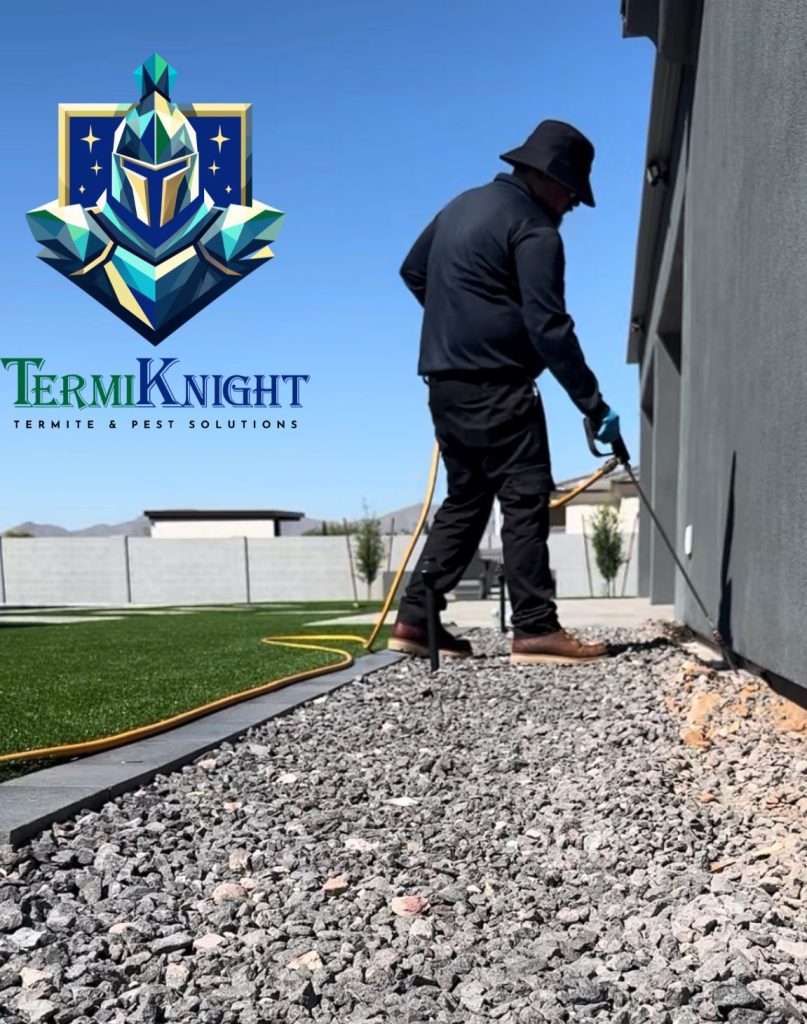
- Trenching
- Rodding soil
- Treating expansion joints
- Drilling attached concrete where appropriate
- Treating garages
- Treating patios
- Addressing plumbing penetrations
- Applying foam into accessible wall voids
Why Bait Stations Can Leave Untreated Gaps
Bait stations take a different approach.
Individual stations are installed around the property and termites must locate them before feeding on the bait.
The problem is that there are untreated spaces between the stations.
Termites are constantly foraging through the soil.
They do not know they are supposed to find the bait station before reaching your home.
I have personally inspected properties where termite bait stations were already installed while termites continued attacking the structure.
That does not mean bait stations can never work.
It means homeowners should understand what they are relying on.
Bait systems may also require ongoing monitoring and annual fees.
Moisture from leaking irrigation, monsoon rain, or poor drainage can contribute to mold or unfavorable conditions inside stations. Termites may avoid heavily moldy feeding material.
With Arizona already experiencing significant natural termite pressure, I prefer directly protecting the structure with a continuous Termidor HE treated zone rather than waiting for termites to discover individual bait locations.
What Homeowners Should Look for During August
August is still part of Arizona’s second termite swarming season.
That makes this an excellent time to walk around your property and look for unusual activity.
Pay particular attention to:
- Garage walls
- Exterior foundations
- Bathrooms
- Plumbing areas
- Patios
- Utility closets
- Areas around irrigation
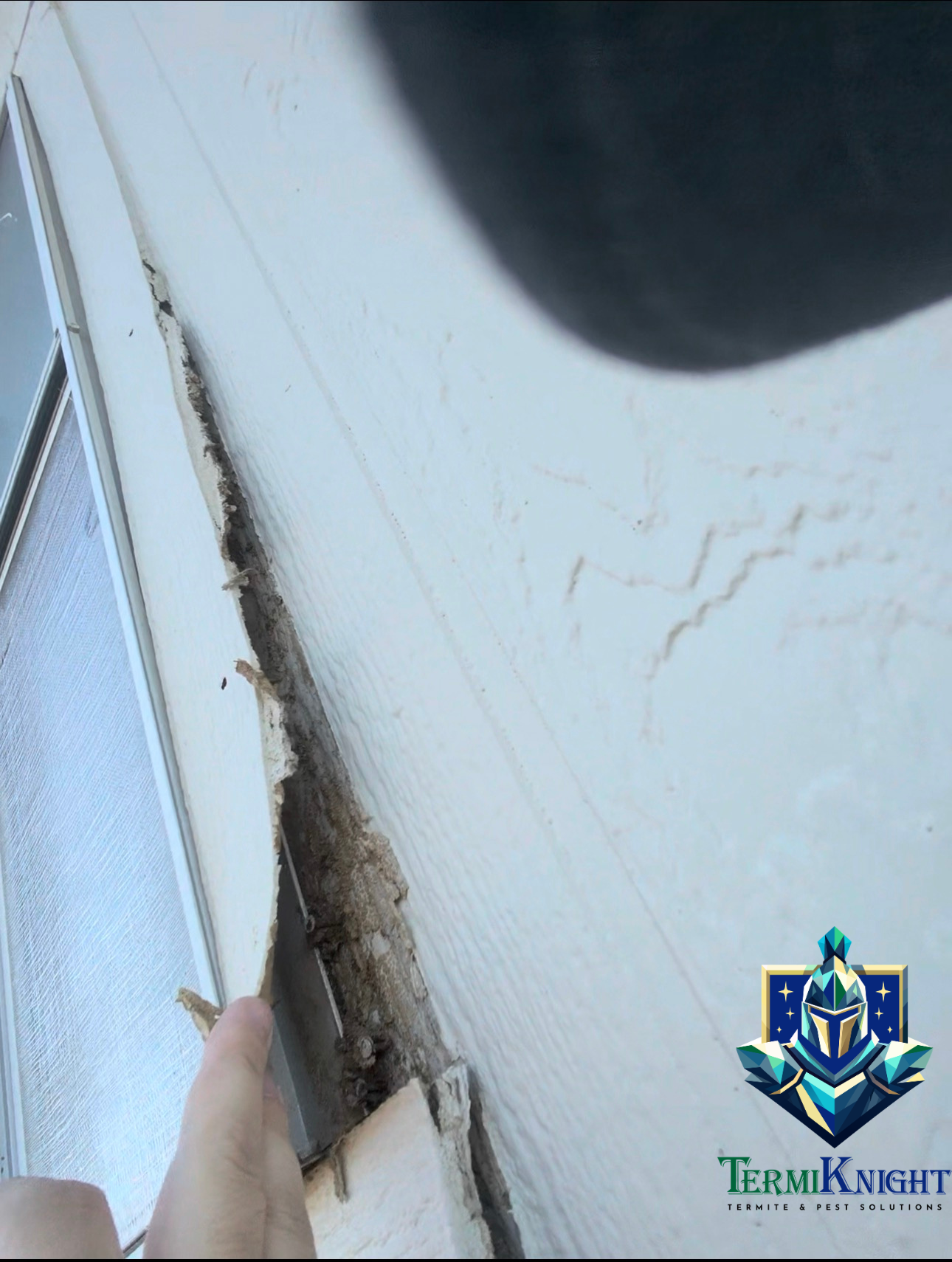
- Windows and doors
- Stucco near the soil line
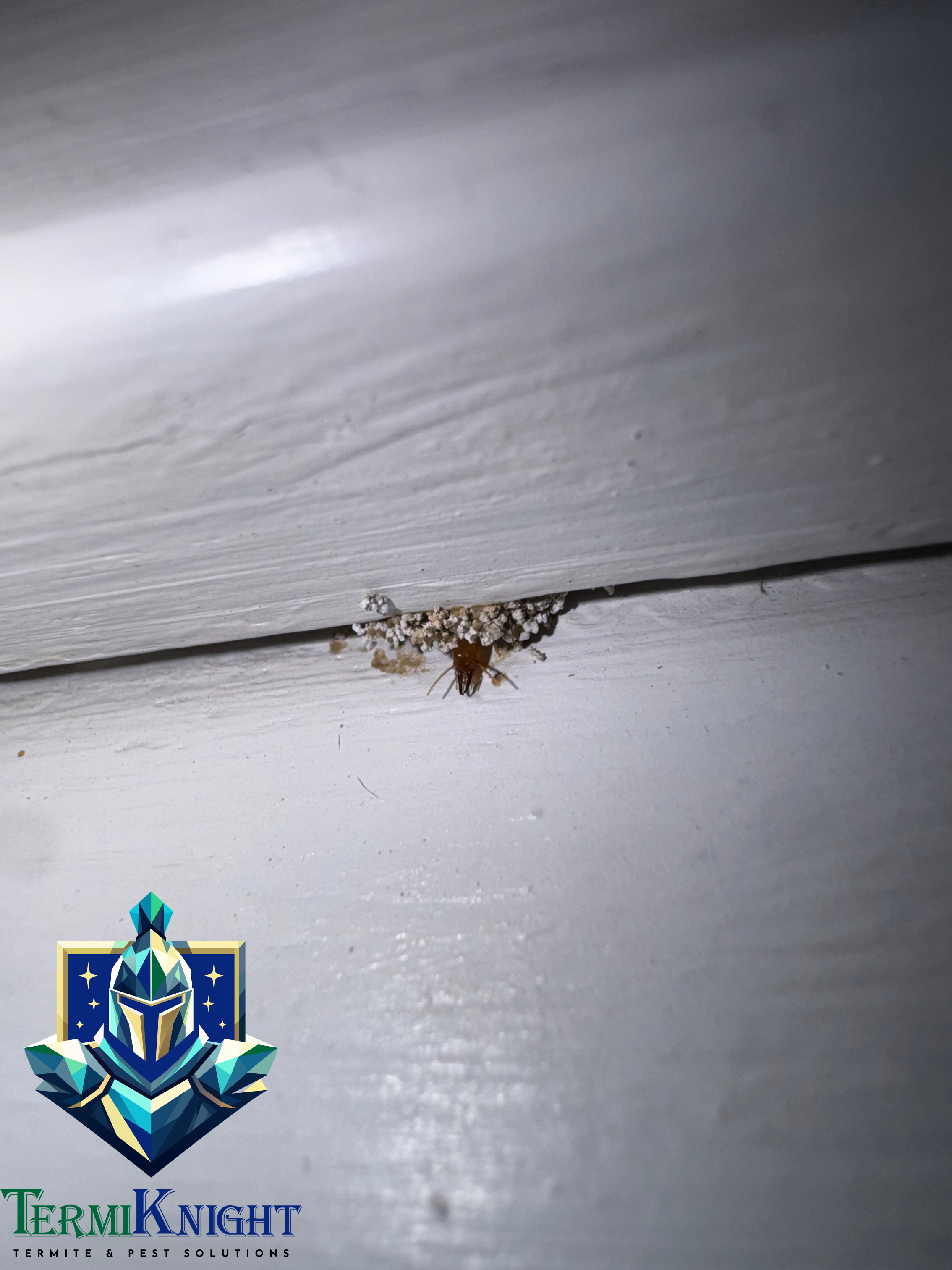
Look for flying swarmers, discarded wings, new mud tubes, unexplained dirt, or damaged wood.
After monsoon storms, also check for areas where water is collecting near the foundation.
Do not destroy suspected termite tubes before an inspection if you can avoid it.
Their location and condition can provide useful information.
How Often Should a Home Be Inspected for Termites?
Arizona homeowners should consider regular termite inspections because our termite pressure is much higher than in many other parts of the country.
Homes with previous termite activity deserve particular attention.
A professional inspection can identify:
- New mud tubes
- Previous treatment areas
- Moisture conditions
- Hidden construction entry points
- Wood-to-soil contact
- Changes around landscaping
- Areas where future activity may be difficult to see
An inspection does not mean a treatment is automatically necessary.
It simply gives you more information about the condition of the property.
What If Termites Are Only Found in One Area?
This is a very common question.
If termites are only visible in one bathroom or garage wall, homeowners understandably wonder why the rest of the home matters.
The important thing to remember is that the visible location only tells us where termites were discovered.
It does not tell us everywhere they may be traveling beneath the structure.
A partial treatment can be used in certain circumstances, but it does not provide the same level of protection as treating the complete structure.
That is why I do not provide a whole-house termite warranty for a localized spot treatment.
For homeowners who want long-term protection and a transferable warranty, a complete treatment is generally the stronger option.
Compare Termite Treatments Before Comparing Prices
Two termite proposals may look similar until you examine what is actually included.
Before choosing a company, ask:
- What product are you using?
- Are you treating the entire home?
- Is the treatment continuous?
- Will attached concrete be treated where needed?
- How will plumbing penetrations be addressed?
- How long is the warranty?
- Are there annual renewal fees?
- What happens if termites return?
- Is the warranty transferable?
- Will the treatment be properly documented?
The lowest initial price is not always the lowest long-term cost.
A program with recurring annual fees can become much more expensive over five or ten years.
TermiKnight’s full Termidor HE treatments include a 5-year initial warranty with no annual renewal fee during the first five years.
The warranty can then be renewed annually for continued protection up to 10 years and is transferable.
Why Professional Termite Control in Surprise AZ Matters
Arizona is termite country.
We have warm weather, irrigation, monsoon moisture, rapid residential development, and established subterranean termite populations throughout the soil.
That does not mean homeowners need to live in fear of termites.
It means termite protection should be approached intelligently.
Know the warning signs.
Keep your foundation visible.
Correct unnecessary moisture problems.
Remove excess cellulose near the home.
Keep records of previous termite treatments.
Most importantly, do not assume that because you cannot see termites, they are not there.
Professional termite control in Surprise AZ is about detecting hidden activity, understanding how termites are entering, and protecting the structure before damage becomes expensive.
Schedule Your Free Termite Inspection
If you have noticed mud tubes, flying swarmers, discarded wings, suspicious wood damage, or something around your home that simply does not look right, TermiKnight offers free termite inspections throughout Surprise and the West Valley.
I will inspect the property, explain what I find, and walk you through your options without pressure.
✔️ Free termite inspections
✔️ $400 OFF termite treatment
✔️ Termidor HE treatments
✔️ 5-year initial warranty, renewable up to 10 years
✔️ No annual renewal fee for the first 5 years
✔️ Transferable warranty
✔️ TARF recorded with the Arizona Department of Agriculture
📞 Call or text: (623) 241-2598
🏰 Protect your Castle with TermiKnight!



Leave a Reply