


If you are searching for termite control in Surprise AZ, there is an important question that often gets overlooked:
Is your home actually protected right now?
Many Arizona homeowners assume that because their home received a termite treatment years ago, they no longer need to think about termites. Others believe a new construction pre-treatment provides permanent protection. Some simply have no idea when their property was last treated or what product was used.
Unfortunately, subterranean termite pressure does not disappear after one treatment.
Arizona has ideal conditions for termite activity, including warm soil, irrigation, landscaping, monsoon moisture, and established subterranean termite colonies throughout residential neighborhoods.
Some areas may have up to 20 subterranean termite colonies per acre. That means even if the colony that attacked your home five years ago was eliminated, other colonies may still be searching through the surrounding soil for new food sources.
Professional termite control in Surprise AZ is not just about reacting when termites suddenly appear. It is about understanding whether your current protection is still doing its job and catching weaknesses before they become expensive problems.
Here are 10 warning signs that your home’s termite protection may need attention.
1. You Do Not Know When the Home Was Last Treated
This is more common than you might think.
Homeowners often purchase a property without receiving complete termite records from the previous owner.
You may know the house was “treated before,” but that information alone does not tell you much.
You should ideally know:
- When the treatment was performed
- Which product was used
- Whether the entire structure was treated
- Whether it was a spot treatment
- How long the warranty lasted
- Whether the warranty transferred
- Whether annual renewal fees were required
- Which areas of the home had previous activity
If none of that information is available, it is difficult to know how much protection remains.
Termite products do not provide permanent protection forever. Soil can be disturbed, landscaping can change, patios can be added, irrigation can be installed, and construction modifications can affect previously treated areas.
If you have no documentation, a professional inspection is a good place to start.
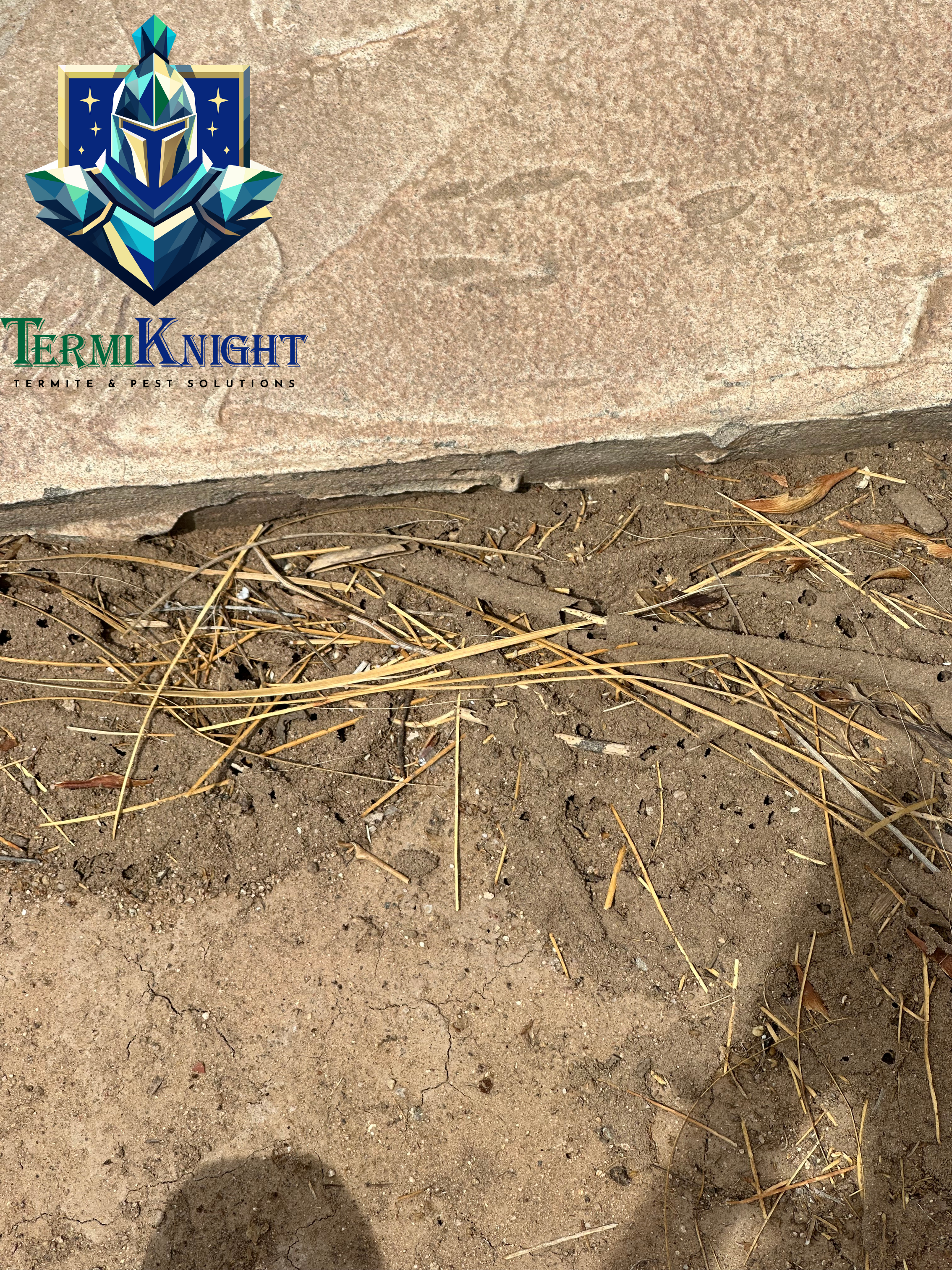
2. You Are Finding New Mud Tubes
Mud tubes are one of the clearest signs that subterranean termites have established a pathway between the soil and the structure.
These tubes protect termites from sunlight and dehydration while allowing workers to move back and forth between the colony and their food source.
Finding a new mud tube does not necessarily mean the entire previous treatment failed.
There are several possibilities:
- The activity may be outside the previously treated area
- Soil may have been disturbed
- The previous treatment may have been localized
- The original product may have degraded
- A construction gap may have provided another entry point
- Another colony may have discovered the structure
The important thing is not to simply scrape the tube away and forget about it.
If possible, leave the tube intact until it can be inspected.
The location can provide valuable information about where termites are entering.

3. Your Previous Treatment Was Only a Spot Treatment
Spot treatments can make sense in certain situations.
If a homeowner only wants a localized area treated, it can address the visible activity at a lower cost.
However, a spot treatment is very different from protecting the entire structure.
Suppose termites are discovered in one bathroom wall.
Treating that location may eliminate activity in the immediate area, but the rest of the home’s foundation remains untreated unless additional treatment was performed.
Subterranean termites do not live in the bathroom wall.
They live in the soil and use hidden pathways to reach the wall.
That means another part of the same colony, or another colony entirely, may eventually find a different entry point.
This is why I do not provide a whole-house termite warranty on localized spot treatments.
For homeowners who want long-term protection, a complete termite treatment in Surprise AZ is generally the stronger option.
4. Your Warranty Has Expired
A termite warranty is valuable because it gives you a plan if termites return.
But warranties do not last forever.
If your previous treatment came with a three-year, five-year, or other limited warranty and that coverage has expired, it may be time to have the property inspected again.
This does not automatically mean you need another treatment.
It simply means you no longer have the same protection if activity returns.
At TermiKnight, our complete Termidor HE treatments include a 5-year initial warranty with no annual renewal fee during the first five years.
After that, the warranty can be renewed annually for continued protection up to 10 years.
The warranty is also transferable.
Long-term termite control should include more than the initial application. It should include a clear plan for what happens if termites return.
5. Landscaping Has Changed Since the Last Treatment
Your property may look completely different today than it did when the original termite treatment was performed.
Maybe you added:
- A patio
- Artificial turf
- Pavers
- New trees
- Raised planters
- Irrigation
- A pool
- A spa
- Concrete walkways
- An outdoor kitchen
- Additional landscaping
All of these changes can affect the soil around the structure.
For example, if previously treated soil is removed and replaced during landscaping, the protective zone may be disturbed.
Concrete additions can also cover areas that were once accessible for treatment.
New irrigation may create moisture conditions that did not previously exist.
This does not mean homeowners should avoid improving their yards.
It simply means major landscaping changes are worth mentioning during future termite inspections.
A professional can evaluate whether those changes created new termite entry opportunities.
6. You Have Consistent Moisture Against the Foundation
Subterranean termites require moisture.
They already live underground where humidity is naturally higher, but persistent moisture near the home can create favorable conditions for foraging workers.
Common sources include:
- Leaking irrigation
- Overwatered plants
- Roof runoff
- Poor grading
- Pool equipment leaks
- Outdoor faucets
- Plumbing leaks
- Air conditioner condensate
Arizona homeowners frequently cover their soil with decorative rock, so moisture problems are not always obvious from the surface.
If one area near the foundation always seems damp, look beneath the rock.
You may discover a broken irrigation emitter or slow leak.
Correcting moisture problems does not eliminate an active termite colony, but it can reduce favorable conditions and make future activity easier to identify.
7. You See Swarmers or Discarded Wings
Arizona has two major termite swarming seasons:
- March through May
- July through September
September remains an important month for termite activity.
During swarming season, mature colonies release winged reproductive termites.
These swarmers leave established colonies and attempt to start new colonies elsewhere.
Homeowners may notice them around:
- Exterior lights
- Windows
- Sliding doors
- Garages
- Patios
- Bathrooms
- Laundry rooms
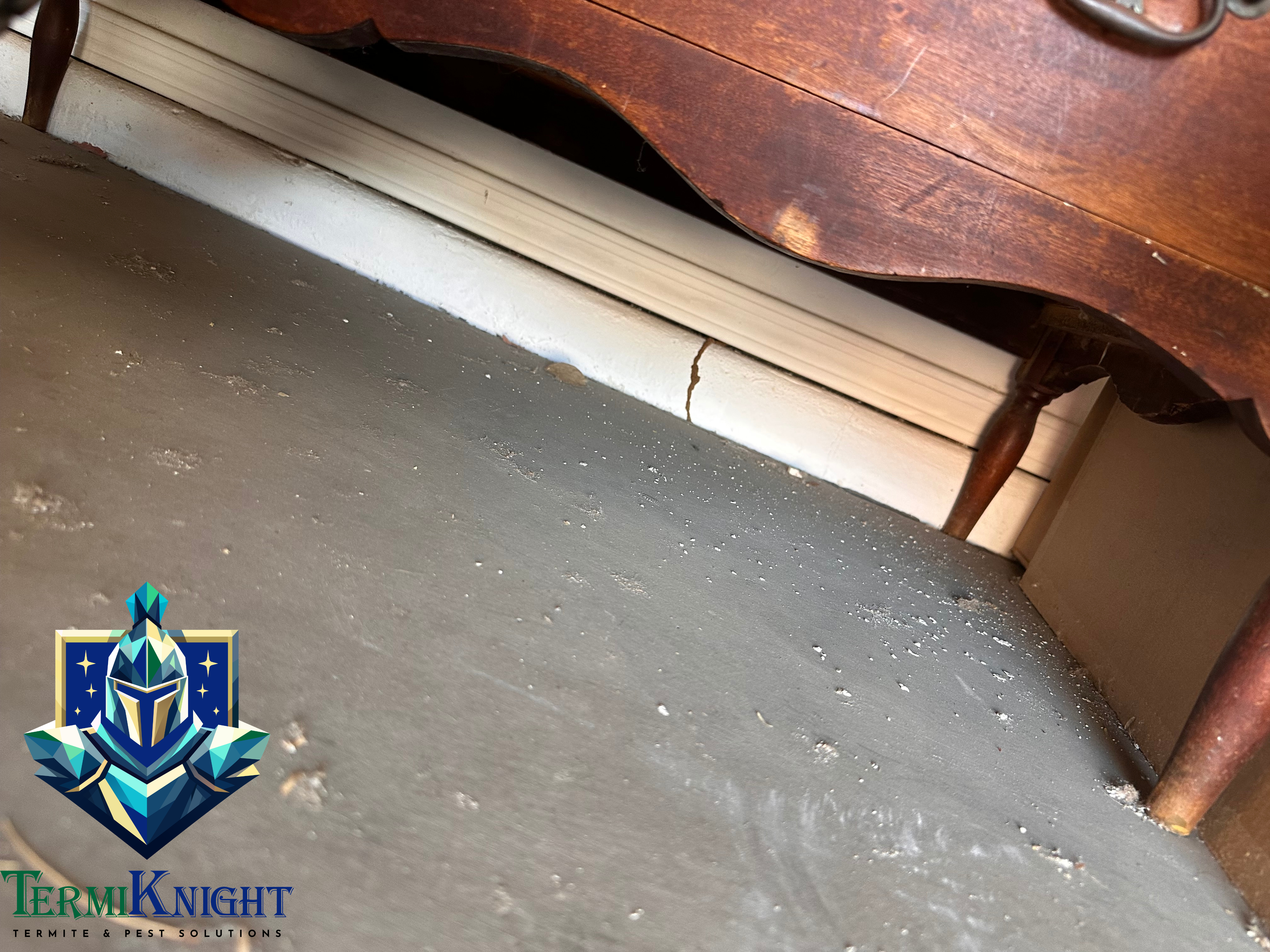
Discarded wings are another common clue.
After swarmers pair up, they shed their wings.
Finding a pile of wings near a window does not automatically mean a colony is inside your home, but it is absolutely worth investigating.
If swarmers are emerging from an interior wall, baseboard, plumbing opening, or other part of the structure, that is an especially important warning sign.
8. The Home Was Pre-Treated During Construction Many Years Ago
New construction termite pre-treatments are valuable.
They help protect the structure before the slab and framing are completed.
But they should not be viewed as permanent lifetime protection.
Years later, several things may have changed:
- Soil may have been disturbed
- Landscaping may have been replaced
- Irrigation may have been installed
- Patios or concrete may have been added
- Construction joints may have shifted
- The original chemical protection may have diminished
Homeowners sometimes tell me:
“But the builder treated the house.”
That is good.
It does not mean termites can never appear.
Subterranean termites are persistent.
A home can be properly pre-treated and still experience termite activity years later.
The surrounding colonies do not disappear simply because the home was protected during construction.
9. Bait Stations Are Present but You Still See Termite Activity
Bait stations take a different approach to termite control than liquid soil treatments.
Individual stations are placed around the property and rely on foraging termites discovering the bait.
The challenge is that there are untreated spaces between individual stations.
Termites do not know they are supposed to find a station.
They are searching through the soil for cellulose.
If they encounter the house before they encounter a bait station, they may continue toward the structure.
I have personally inspected properties where termite bait stations were installed while termites were still active on the home.
That does not mean bait stations can never work.
It means homeowners should understand the limitations of the system.
Arizona moisture can also create challenges.
Leaking irrigation, monsoon rain, poor drainage, and overwatering may contribute to mold or unfavorable conditions inside bait stations.
Termites may avoid heavily moldy feeding material.
Bait systems also generally require ongoing monitoring, and many involve recurring annual fees.
With some areas of Arizona already experiencing up to 20 subterranean termite colonies per acre, I prefer directly protecting the structure rather than waiting for termites to discover individual bait locations.
10. The Original Treatment Did Not Create Continuous Protection
This is perhaps the biggest difference between treatments.
Subterranean termites can approach a home from many directions.
They may travel:
- Along the exterior foundation
- Beneath patios
- Beneath garage slabs
- Through plumbing penetrations
- Through expansion joints
- Through foundation cracks
- Behind stucco
- Through construction joints
If large untreated areas remain, termites may eventually locate them.
For post-construction treatments, I use Termidor HE.
The objective is to create a continuous treated zone around the structure wherever the home’s construction allows.
Depending on the property, that may involve:
- Trenching
- Rodding soil
- Treating expansion joints
- Treating plumbing penetrations
- Drilling attached concrete where appropriate
- Treating garages
- Treating patios
- Applying foam into accessible wall voids
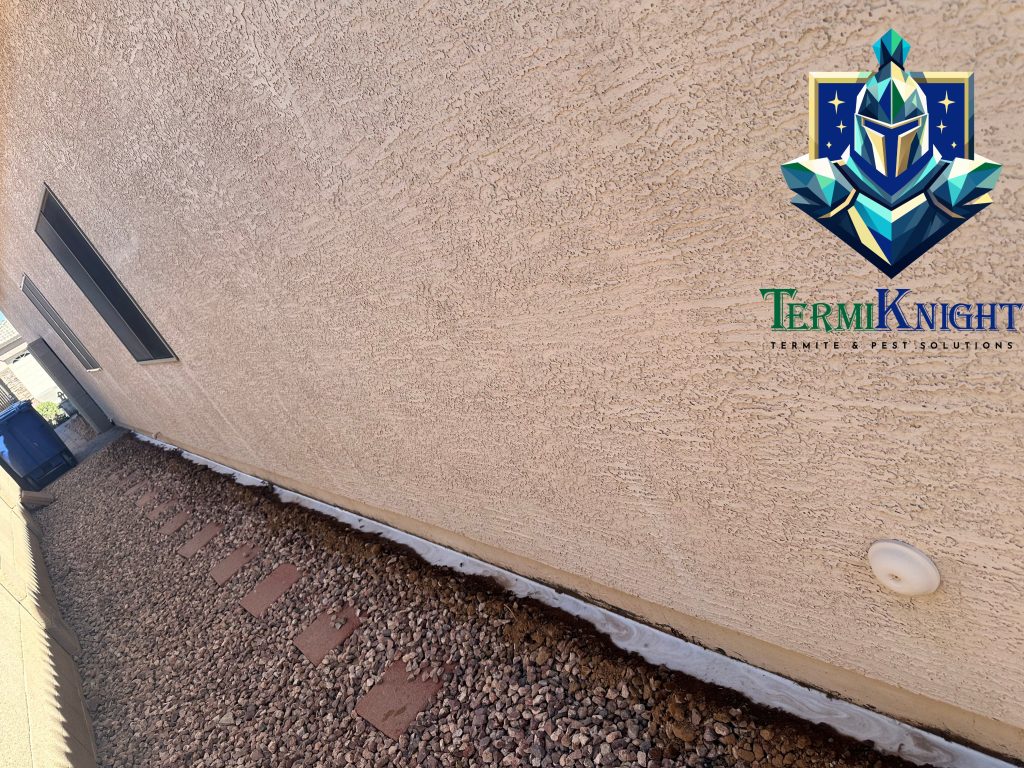
The treatment plan should also account for the foundation type.
For example, post-tension slabs require different considerations because tensioned steel cables are present inside the concrete.
Interior drilling should generally be avoided in those areas.
Floating slabs, garages, patios, and other attached concrete may require different treatment techniques.
The property should determine the treatment, not the other way around.
Why Termidor HE Works Differently
Termidor HE is a non-repellent liquid termiticide.
That means termites do not readily detect the treated area and simply turn around.
Instead, worker termites can travel through treated soil and become exposed to the active ingredient.
Because termites are social insects, exposed workers can transfer the treatment to other members of the colony through normal contact and food sharing.
That transfer effect is one of the reasons I prefer Termidor HE for professional termite control.
The termites you see inside your home are only workers.
The queen remains protected underground.
Subterranean termite colonies can extend deep beneath the surface, and the queen may produce approximately 300 to 500 eggs per day.
Killing a handful of visible workers is not the same thing as addressing the colony.
Professional treatment focuses on the connection between the underground colony and the home.
Why Termites Can Return Years After a Successful Treatment
Homeowners are sometimes surprised when termite activity appears many years after a successful treatment.
That does not automatically mean the original treatment was performed incorrectly.
Remember what is happening beneath the ground.
Arizona can have numerous termite colonies within a relatively small area.
One colony may be eliminated.
Another colony may eventually forage into the same property years later.
Soil conditions also change.
Landscaping changes.
Construction changes.
Moisture changes.
The termite pressure remains.
That is why termite control in Surprise AZ should be viewed as long-term home protection rather than a one-time event.
What Should You Do If You Think Your Termite Protection Is Failing?
First, do not panic.
Seeing one suspicious area does not automatically mean your entire treatment has failed.
Schedule an inspection.
If possible, keep the evidence intact.
Do not immediately scrape away mud tubes or spray everything with insecticide.
During an inspection, a termite professional can evaluate:
- Whether the activity is current
- Where termites may be entering
- Whether previous treatment areas are visible
- Whether landscaping has disturbed treated soil
- Whether moisture conditions have changed
- Whether the activity falls within an existing warranty
- Whether additional treatment is recommended
If you have old treatment documents, keep them available.
Knowing what product was used and when the work was completed can be extremely helpful.
Should You Retreat the Entire House?
Not every situation requires a full treatment.
If the home already has a strong existing treatment and one isolated area needs attention, localized retreatment may sometimes make sense.
On the other hand, if:
- The original treatment is very old
- Treatment records are unavailable
- The previous work was only a spot treatment
- Multiple areas show activity
- Large portions of soil have been disturbed
- You want a new whole-house warranty
then a complete treatment may be the better long-term option.
The decision should be based on what is happening at the property, not a predetermined sales pitch.
A termite inspection should give you enough information to make an informed decision.
Does Finding Dead Termites Mean the Treatment Is Working?
Sometimes homeowners find dead or dying termites after treatment and immediately worry that activity is continuing.
In reality, finding affected termites shortly after treatment may be expected.
A non-repellent product such as Termidor HE is designed to allow termites to interact with treated areas rather than instantly avoid them.
The important question is whether the activity continues over time.
Your termite company should explain what to expect after treatment and what signs would justify another inspection.
How Often Should Arizona Homes Be Inspected?
Because termite pressure is so high in Arizona, I believe regular inspections are worthwhile.
Homes with previous activity deserve particular attention.
At TermiKnight, our complete termite treatments include one inspection per year upon request during the covered period.
If termite activity is discovered and retreatment is necessary under the warranty, that is included as well.
Regular inspections can help identify new activity before homeowners notice major damage.
You do not need to become obsessed with termites.
You simply want someone periodically checking the areas most homeowners never look at.
What Makes a Good Long-Term Termite Control Plan?
A strong termite control plan should include several things.
First, identify the current problem.
Second, understand the construction of the home.
Third, create as much continuous protection around the structure as the construction allows.
Fourth, address important interior entry points when necessary.
Fifth, provide a warranty that clearly explains what happens if termites return.
Finally, keep documentation.
You should know:
- What product was used
- When the treatment occurred
- What areas were treated
- How long the warranty lasts
- Whether renewal fees apply
- Whether the warranty transfers
Professional termite treatment in Surprise AZ should leave homeowners with both protection and clarity.
Do Not Wait for Major Damage to Tell You Something Is Wrong
One of the biggest advantages termites have is that they are patient.
They do not need to cause dramatic damage overnight.
Workers can continue feeding quietly behind walls while the colony remains safely underground.
That is why homeowners should pay attention to the smaller warning signs.
A mud tube.
A few discarded wings.
Soft trim.
An unexplained spot of damage.
A history of treatment with no remaining paperwork.
Expired warranty coverage.
None of these automatically means you have a major infestation.
They simply mean it may be time to take another look.
Protect Your Home With Professional Termite Control in Surprise AZ
A previous termite treatment is valuable, but it should never create a false sense of permanent protection.
Arizona termite pressure is simply too high.
Our warm climate, irrigation systems, landscaped neighborhoods, monsoon moisture, and established subterranean termite populations create an environment where termites will always be present.
The goal is not to eliminate termites from Arizona.
The goal is to stop them from using your home as their next food source.
Professional termite control in Surprise AZ combines proper inspection, appropriate treatment, continuous protection, documentation, and long-term warranty coverage.
If you are unsure when your home was last treated, your warranty has expired, you are seeing fresh activity, or you simply want to know whether your current protection is still doing its job, an inspection is the easiest place to start.
Schedule Your Free Termite Inspection
TermiKnight Termite & Pest Solutions provides professional termite inspections and Termidor HE treatments throughout Surprise and the West Valley.
I will inspect the property, explain exactly what I find, and walk you through your options without pressure.
✔️ Free termite inspections
✔️ $400 OFF termite treatment
✔️ Termidor HE treatments
✔️ 5-year initial warranty, renewable up to 10 years
✔️ No annual renewal fee for the first 5 years
✔️ One annual inspection available upon request
✔️ Retreatment included when necessary under the warranty
✔️ Transferable warranty
✔️ TARF recorded with the Arizona Department of Agriculture
📞 Call or text: (623) 241-2598
🏰🛡️ Protect your Castle with TermiKnight!


Leave a Reply